Living in Framingham, MA: The Essential Guide for Young Families
Explore Framingham’s diverse, leafy MetroWest vibe: $659K median homes, 8,482 students, 35.79% tree cover, and direct MBTA rail to Boston.
Written ByArthur Deych
PublishedJuly 24, 2026
We're AD Advisors, a Brookline, MA real estate team led by Arthur Deych, serving buyers, sellers & investors across Greater Boston. Let's find your next move. Serving Brookline, Winthrop, Norwood, Watertown, Waltham, Revere, Medford, Ashland, Framingham, Dedham, Newton, Somerville, Needham, Boston, Cambridge and Westwood, MA.
Framingham, MA
Region
In July 2026, the median sale price for homes in Framingham, MA was $677,000, up 9.2% from a year earlier.
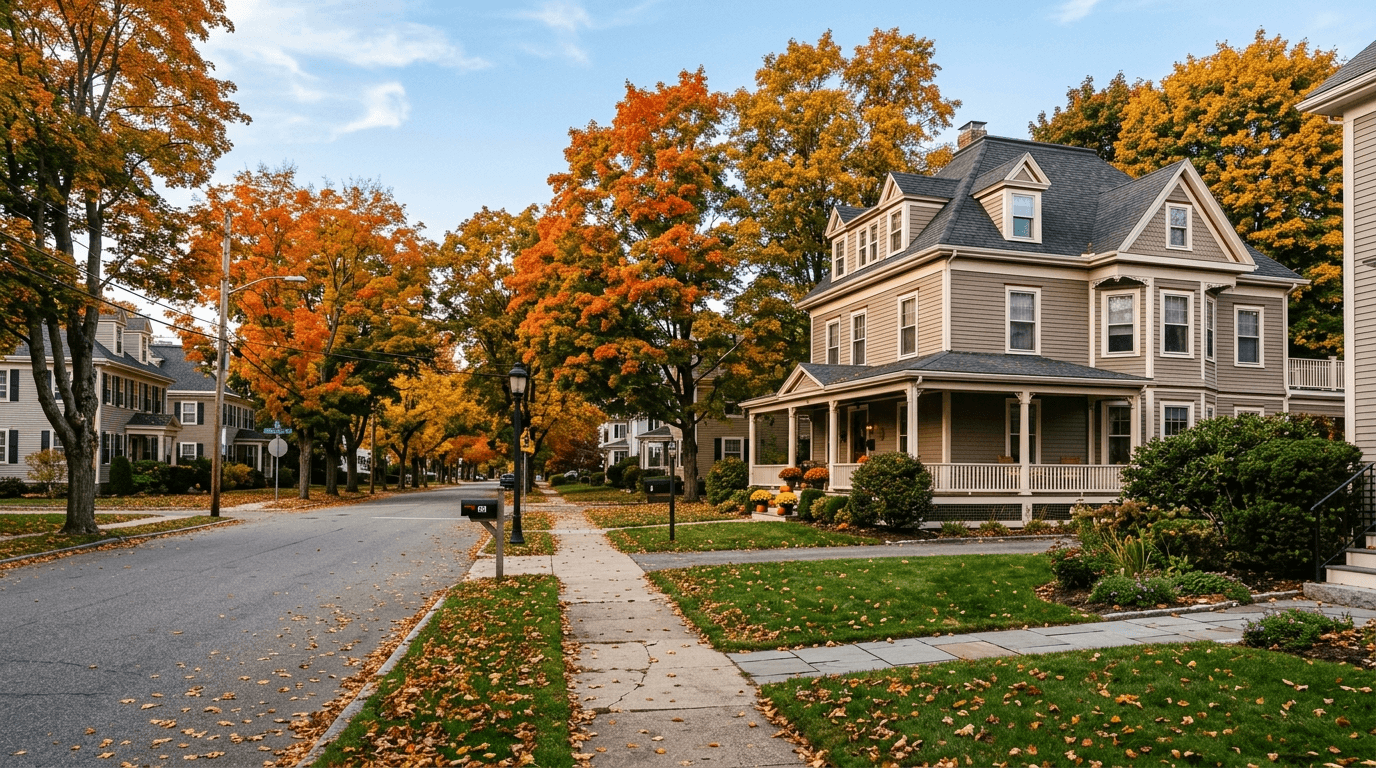
Framingham sits right in the heart of MetroWest, and over the years it's quietly become one of the region's most practical—and welcoming—places for young families to put down roots. It offers something that's getting harder to find: real neighborhood character, generous yards, an honest commuter-rail link to Boston, and a price tag that, while not exactly cheap, comes in well under the seven-figure norms you'll hit in nearby Newton or Brookline. Let me walk you through the vibe, the housing, the gathering spots, and the daily commute, so you can get a real sense of what life here actually feels like.
Is Framingham, MA a Good Place to Raise a Family?
Yes—Framingham blends quiet, tree-lined residential streets with an active, diverse community and a strong public school system, earning a "B+" for being good for families and an "A" for diversity on Niche. It's the kind of place where you can push a stroller down a leafy side street in the morning and still catch a train into Boston that same afternoon.
What I always tell families touring here is that Framingham feels lived-in, in the best possible way. It's not a manicured showpiece suburb. It's a real community of roughly 72,399 residents with deep roots and remarkable diversity—ranked #6 of 189 most diverse suburbs in Massachusetts. When clients relocate here from the denser corners of Greater Boston, they say the same thing again and again: the change of pace—more yard, more quiet, more room to breathe—is exactly what they'd been hoping for.
A big part of why this works for young families comes down to the age mix. Framingham has a meaningful base of children and prime family-forming adults, which translates into playmates on the block and parents who are in the same season of life.
Framingham Age Distribution
Framingham’s age mix includes a meaningful base of children and teens, plus strong representation among prime family-forming age groups, especially residents ages 25–44.
TOTAL
<10 years
12%
10-17 years
9%
18-24 years
10%
25-34 years
14%
35-44 years
16%
45-54 years
11%
55-64 years
13%
65+ years
15%
Framingham’s age mix includes a meaningful base of children and teens, plus strong representation among prime family-forming age groups, especially residents ages 25–44.
Residents ages 25–44 make up 30% of the population, and children under 10 account for another 12%. That's a healthy, growing community—not a town quietly aging out of its schools.
And speaking of schools: Framingham Public Schools serve 8,482 students across a full network of neighborhood elementary campuses, middle schools, and a large comprehensive high school. Families tend to gravitate toward specific campuses, and the sheer size of the system means the programming is robust—full-day kindergarten for 100% of enrolled kindergartners, before- and after-school "Explorers" and "Flyers" programs, and strong youth sports leagues.
Framingham Public School Enrollment by Campus, 2025–26
School enrollment helps young families understand the scale of Framingham’s public school community, from neighborhood elementary schools to the 2,271-student high school.
Elementary
Middle
High School
Pre-K
School enrollment helps young families understand the scale of Framingham’s public school community, from neighborhood elementary schools to the 2,271-student high school.
As you can see, campuses run the gamut, from intimate neighborhood elementaries like Mary E Stapleton (322 students) all the way up to Framingham High School's 2,271 students. When I'm touring homes with parents, one of the first things they ask me to do is map the exact elementary attendance zone. If that matters to you—and honestly, it should—nail down the campus before you fall in love with the house.
What Kinds of Homes Are For Sale in Framingham, MA?
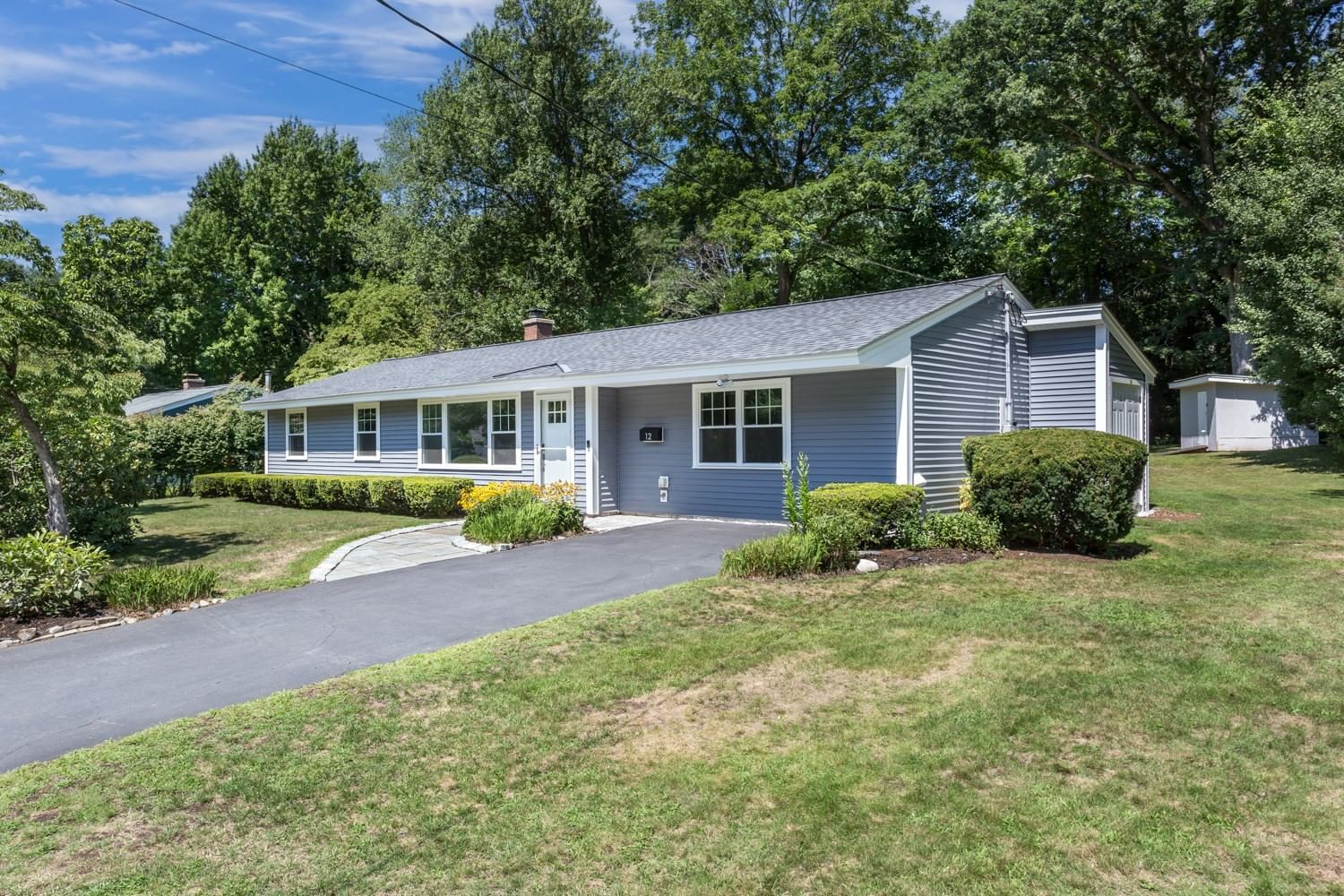
Framingham offers a rich mix of historic New England housing—Colonials, Victorians, and Craftsman-era homes—on generous lots, with single-family homes making up the majority of the market and condos providing an affordable entry point. You get genuine architectural character here, not cookie-cutter subdivisions.
Framingham Market Snapshot: June 2026
A family-friendly market snapshot for Framingham: pricing remains substantial, but 120 active listings, 35 open houses, and 33 price reductions suggest buyers may have more options than in tighter spring conditions.
The June 2026 snapshot tells a reassuring story for buyers. The median price sits at $659,000, with 120 active listings, 35 open houses, and 33 price reductions on the market. That combination—more inventory paired with a real number of price drops—means you likely have more room to breathe than families did during the frantic spring bidding wars. Homes are still moving at a healthy clip, around 24 days on market, but you're negotiating from steadier ground than you would have in 2021 or 2022.
Here's how the housing stock breaks down:
•Single-family homes are the heart of the market, averaging roughly $733,500 (per Houzeo's Framingham market data). Expect classic center-entrance Colonials, gable-front Victorians, and Craftsman bungalows—many with the built-ins, wrap-around porches, and mature hardwoods that give older neighborhoods their soul.
•Condos offer a far more accessible entry point, averaging around $225,500 (per Houzeo). That's a real option for younger buyers who aren't quite ready to take on a full single-family home.
•Lot sizes tend to be generous by Greater Boston standards. Plenty of established neighborhoods sit on a quarter- to half-acre, which means room for kids to run and parents to garden.
Every neighborhood has its own personality and its own price tag. Per VIP Group's spring 2026 neighborhood data, North Framingham carried a median of $738,000, Saxonville came in around $612,250, and Downtown Framingham landed at a more affordable $545,000. Statewide, the Massachusetts median sits at roughly $720,500 (per VIP Group), so Framingham's overall pricing lands right around—and in several pockets below—the state benchmark. That's the value story that keeps pulling families out from the inner ring.
Let's put that in regional perspective. Compared to Newton's median sale price near $1,500,000 or Brookline's around $1,350,000, Framingham hands young families dramatically more house and yard for the money. Those closer-in towns offer more urban density and a certain prestige, sure. But Framingham delivers the quiet village feel—and the square footage—that most growing families are actually chasing.
Looking ahead, Houzeo forecasts modest price growth of 2–4% for Framingham through 2026, with 30-year fixed mortgage rates projected in the 6.0%–6.8% range. In plain terms: steady, sustainable appreciation instead of the wild swings we've all lived through lately.
Where Do Families Gather in Framingham, MA?
Families in Framingham gather at expansive parks, the historic Framingham Centre Common, and the beloved seasonal Farmers Market—plus a wealth of green space that earns the town an "A" for outdoor activities on Niche. With roughly 35.79% tree coverage, this is a genuinely green community.
When it comes to outdoor time, families have real choices. Farm Pond Park is a local favorite for weekend outings, and the adjacent Farm Pond Dog Park is a dependable spot for the four-legged member of the household. These are the everyday places where neighbors actually bump into each other—the connective tissue of community life.
The city is also investing heavily in these family-serving spaces, and that tells you a lot about where its priorities lie.
$40 millionTotal Capital Investment
Family Infrastructure Spotlight: Parks & Road Improvements
Local capital work points to continued investment in family-serving amenities and everyday infrastructure, including a major park investment and a short-duration roadway overhaul.
That $40 million capital investment in Mary Dennison Park is a major, long-term commitment to family recreation—the kind of civic spending that pays dividends for decades of kids and parents. Pair it with the short, three-month Winter Street overhaul, and you've got a city actively maintaining the everyday infrastructure families rely on.
The seasonal Framingham Farmers Market is another anchor of community life. Now in its fifth season, it brings together 159 total vendors, with about 89 weekly vendor spaces, 5 local farms, and 13 food trucks (per local reporting from The Hamer). It's exactly the kind of weekend ritual—produce, prepared food, running into half the neighborhood—that makes a town start to feel like home.
For rainy days and rich programming, the Framingham Public Library is a genuine gem, and organizations like the Boys & Girls Clubs of MetroWest give families dependable after-school and enrichment options.
How Is the Commute From Framingham, MA to Boston?
Framingham offers a direct, stress-free commuter-rail connection to Boston's South Station via the MBTA Framingham/Worcester Line, plus immediate access to the Massachusetts Turnpike (I-90) and Route 9—earning the town a "B+" for commute on Niche. For working parents, that rail link is often the thing that seals the deal.
The Framingham/Worcester Line is one of the busier commuter-rail routes in the whole system, carrying roughly 10,606 daily boardings—proof of just how many local families lean on it. The Framingham station anchors the downtown, so you can leave the car parked and hand your commute over to the train.
Now, a note of transparency, because families deserve the full picture: the Framingham/Worcester Line is currently undergoing significant track improvements. The MBTA is replacing about 15 miles of rail (roughly 7.5 track miles) between Framingham and Auburndale—new track engineered to last 25+ years. During construction, some midday trips run about 5 minutes longer, and a handful of inbound trains have been temporarily pulled. The short-term disruption is real. But the long-term payoff is a more reliable ride for the next generation of commuters.
A few practical notes as you plan your daily travel:
•Fares are zone-based, and a weekend unlimited pass is just $10—which makes family day-trips into the city genuinely affordable.
•By car, the Mass Pike (I-90) and Route 9 put you within easy reach of both Boston to the east and Worcester to the west, plus the MetroWest tech and biotech employers so many families work for.
•Service hours for MBTA support run 6:30 AM–8 PM at 617-222-3200, if you ever need to check status.
Compared to living inside Boston or Cambridge—where you trade square footage and yard space for proximity—Framingham lets a family keep the train commute while gaining the home and neighborhood they actually want. For most of the young families I work with, that's the trade that finally makes the math add up.
The Bottom Line for Young Families
Framingham gives you historic character, real yards, a diverse and welcoming community, a large public school system, and an honest rail link to Boston—all at a price point that undercuts the inner-ring suburbs. With a median around $659,000, more inventory than the frantic spring market, and steady projected growth of 2–4%, this is a place where a prepared family can buy with confidence instead of panic.
If you're weighing Framingham against the pricier towns closer to Boston, the smartest first move is to get crystal clear on your must-haves—school zone, commute style, yard size—and then let the data guide your offer rather than the bidding-war anxiety. That's how families land the right home here, and it's exactly the kind of grounded, numbers-first decision this town rewards.
Local Spots & Favorites
Framingham Market Statistics
Median sale price, days on market, and closed sales by property type.
In July 2026, the median sale price for homes in Framingham, MA was $677,000, up 9.2% from a year earlier.
Is Framingham, MA a good place for young families?
Yes. Framingham, MA combines quiet, tree-lined residential streets, generous yards, a diverse community, and a strong public school system. It has a Niche grade of B+ for being good for families and an A for diversity.
How are the schools in Framingham, MA for families?
Framingham Public Schools serve 8,482 students across neighborhood elementary schools, middle schools, and Framingham High School. The district offers full-day kindergarten for 100% of enrolled kindergartners, along with before- and after-school Explorers and Flyers programs.
What types of homes are available in Framingham, MA?
Framingham, MA offers a mix of historic single-family homes, condos, and established neighborhoods with generous lots. Single-family homes are the core of the market, while condos provide a more affordable entry point for younger buyers.
Are condos in Framingham, MA affordable for first-time buyers?
Yes. Condos in Framingham, MA average around $225,500, making them a more accessible option than single-family homes, which average roughly $733,500. This gives first-time buyers and young families a lower-cost way to enter the local market.
How much does it cost to buy a home in Framingham, MA?
The median home price in Framingham, MA was about $659,000 in June 2026. Neighborhood pricing varies, with North Framingham around $738,000, Saxonville around $612,250, and Downtown Framingham around $545,000.
How is the commute from Framingham, MA to Boston?
Framingham, MA has a direct MBTA commuter-rail connection to Boston’s South Station on the Framingham/Worcester Line. The city also offers convenient access to the Massachusetts Turnpike, I-90, and Route 9.
What family-friendly amenities are in Framingham, MA?
Families in Framingham, MA commonly gather at Farm Pond Park, Framingham Centre Common, the seasonal Framingham Farmers Market, and the Framingham Public Library. The community also benefits from significant green space, with about 35.79% tree coverage and a Niche grade of A for outdoor activities.
Is Framingham, MA more affordable than nearby Boston suburbs?
Framingham, MA is generally more affordable than nearby Newton and Brookline. Its median price of about $659,000 is well below Newton’s median near $1,500,000 and Brookline’s around $1,350,000, while still offering larger yards, neighborhood character, and commuter-rail access.