
# What Was Watertown's Residential Exemption Worth in FY 2026 — and Are You Getting It?
Key Takeaways
•The savings are real: For FY 2026, Watertown's Assessing office listed a $324,715 value exclusion against a $12.20 per $1,000 rate — $3,961.52 off a qualified bill.
•Don't assume it carries over: Confirm with the Watertown Board of Assessors whether you need to file, especially after a title change.
•The bottom line: FY 2026 has closed; FY 2027 is underway. The live question is whether you're on the rolls now.
Why Doesn't This Tax Break Come With the Deed?
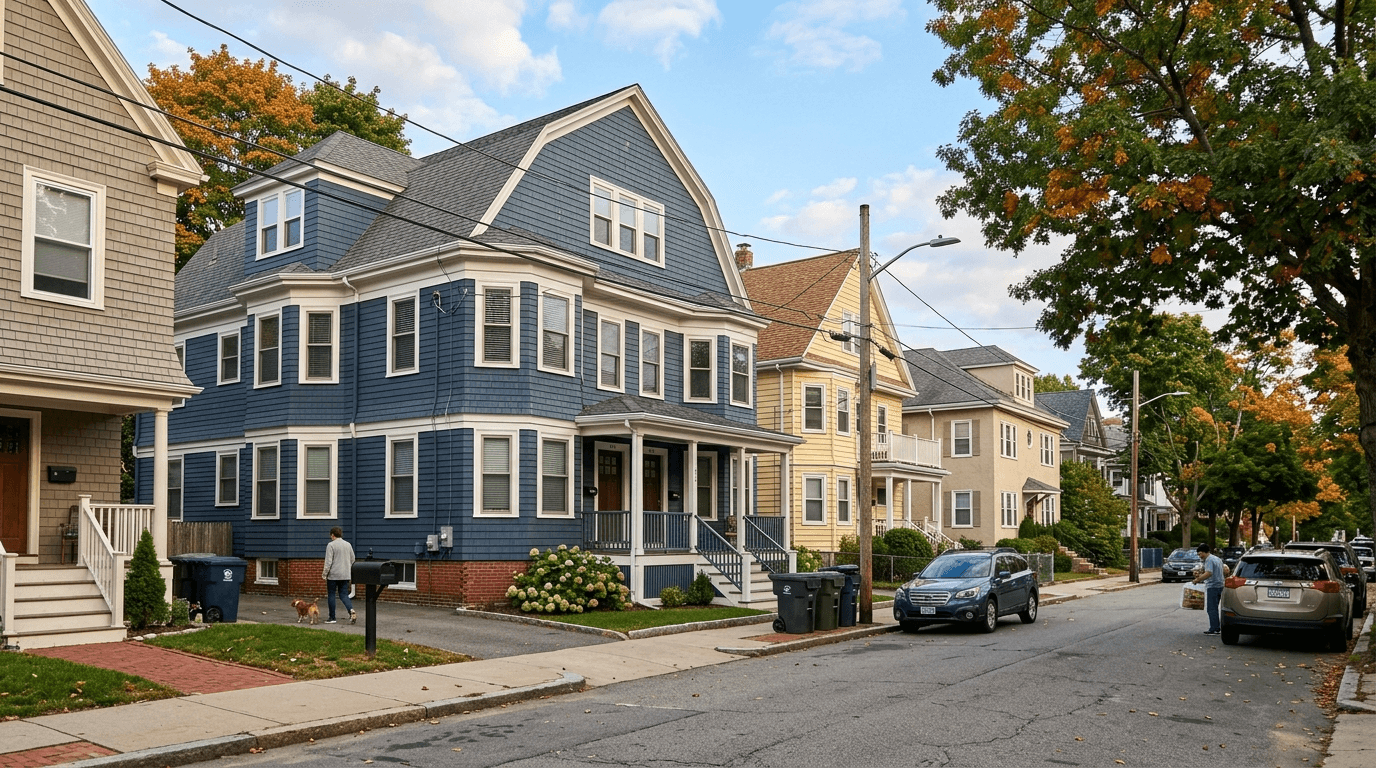
Buy a home in Watertown, and the tax bill comes with it. The discount doesn't automatically follow.
This exemption exists for owners who live in the home as their primary residence, and it works by shrinking the number your tax is actually based on. The city assigns an assessed value — its own estimate of what your home is worth for tax purposes — and the exemption knocks a fixed amount off that value before the residential rate ever touches it.
For FY 2026, Watertown listed a $324,715 exclusion against the $12.20 per $1,000 residential rate. Run the math, and that's $3,961.52 back in your pocket.
How Watertown’s FY2026 Residential Exemption Is Calculated
Calculation table tying the exemption value exclusion and residential tax rate to the resulting FY2026 tax savings.
| Category | General |
|---|---|
| Residential Exemption Value Exclusion | $324,715 |
| Residential Tax Rate | $12.20 / $1,000 |
| Residential Tax Exclusion | $3,961.52 |
That's no rounding error. The FY 2026 average residential bill ran $11,328 without the exemption and $7,363 with it — a $3,965 gap that showed up month after month in your escrow payment, the amount your lender collects to cover taxes.
Average Watertown Residential Tax Bill: With vs. Without the Exemption
Comparison of reported average FY2026 residential tax bills for exempt and non-exempt Watertown homeowners.
| Series | Label | Value |
|---|---|---|
| Average FY2026 residential tax bill | Without residential exemption | $11,328 |
| Average FY2026 residential tax bill | With residential exemption | $7,363 |
FY 2026 wrapped up on June 30, 2026, and FY 2027 is already rolling. So the real question is simple: what does your current bill actually show?
Why Does Watertown Lean on This Exemption?
Think of it as pressure relief for the people who actually live here. Watertown carries a hefty commercial tax base — biotech especially — and each year the city votes on how to split the burden. That vote is what lets Watertown charge one rate for homes and a steeper one for businesses, shifting more weight onto commercial property.
The exemption's size shifts with each year's vote, so last year's number isn't a promise. Ask the Assessors what FY 2027 actually looks like.
Your exemption filing is the one piece of this whole equation you personally control.
What Are the Strongest Arguments Against This?
"Isn't this a shell game because the residential rate went up?"
Fair point, partly. The rate sits higher than it would without the exemption, so that $3,961.52 isn't free money — it's a reshuffling. What it really does is separate owner-occupants from comparable owners who skip filing: that's the $3,965 gap between the two average bills above. Miss the filing, and you land on the wrong side of that line.
"Why do I see both $3,961.52 and $3,965?"
$3,961.52 is exact math — the $324,715 exclusion times the $12.20 rate. $3,965 is the gap between average FY 2026 bills with and without the exemption ($11,328 vs. $7,363), so averages nudge it a few dollars off. For your own bill, trust the $3,961.52.
"Don't assessors already know I live there from the deed?"
Sometimes, yes — and if nothing's changed, you might already be covered. The cases worth double-checking are the ones where records lag: a recent purchase, a title shifted into a trust, a new co-owner, a rental you've since moved into yourself. The call takes five minutes. The FY 2026 stakes were $3,961.52.
Do You Qualify, and What Now?
Who Is Left Out?
Investors, non-occupant LLC owners, second-home owners, and landlords who don't live on-site shouldn't expect this one. Renters are out too.
Worth a phone call: title held in a trust, a divorce or inheritance situation, or a multi-family property where you occupy one unit yourself. New-construction buyers should also ask about a supplemental bill — an extra bill issued mid-year once construction wraps.
What Is Your Next Step?
Contact the Watertown Board of Assessors, listed on the city's Assessing page at 149 Main Street, (617) 972-6410, assessors@watertown-ma.gov.
Ask three things: what the FY 2027 exemption amount is, whether it's already applied to your current bill, and whether anything about your eligibility has changed.